
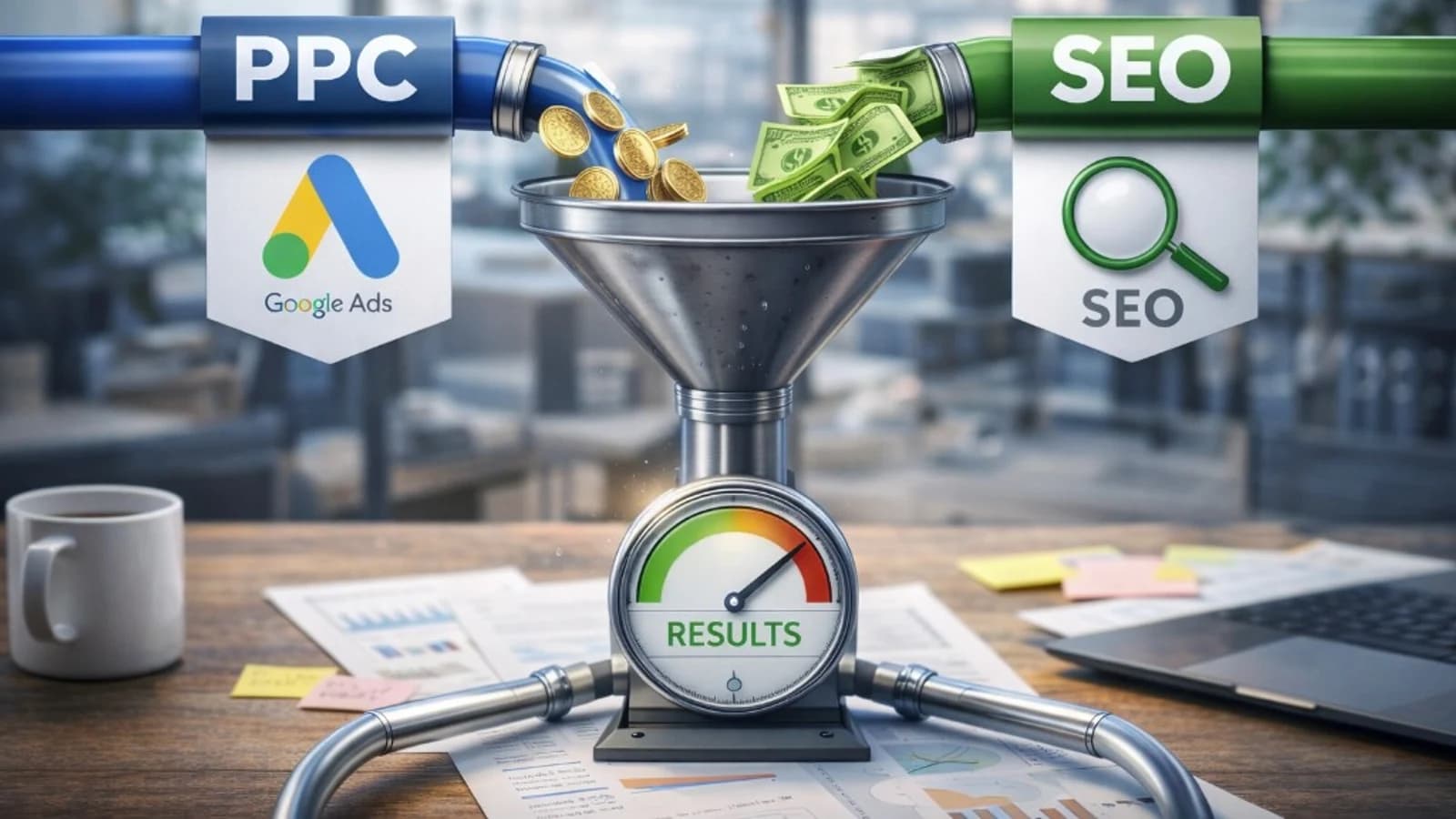
Validate keyword demand before long SEO cycles
SEO content takes time to rank. PPC lets you test intent clusters quickly so content investments are based on real conversion behavior.
Use paid conversion data to prioritize SEO pages around terms that produce qualified opportunities, not just traffic.
Test messaging in ads before rewriting core pages
Ad headlines and descriptions provide rapid copy testing at scale. Winning message angles can then inform H1s, meta tags, and on-page narrative.
This reduces guesswork and keeps SEO copy aligned with buyer language that already converts.
Use paid performance to shape content hierarchy
If a service variation consistently drives high-quality leads in paid campaigns, it likely deserves stronger organic page prominence and internal linking.
Channel data should influence site architecture decisions, not just media budget shifts.
Protect branded demand while SEO compounds
Even when organic rankings improve, branded PPC protects click share from competitors and maintains controlled messaging.
A balanced mix improves total SERP ownership and reduces vulnerability to ranking volatility.
Unify reporting around pipeline contribution
Cross-channel attribution reveals how PPC assists organic conversions and vice versa. Without that view, teams underinvest in high-impact touchpoints.
Measure channels by their combined effect on qualified pipeline and revenue velocity.
Want a unified PPC + SEO strategy?
We connect paid and organic execution into one demand-generation system.
Talk to strategy team